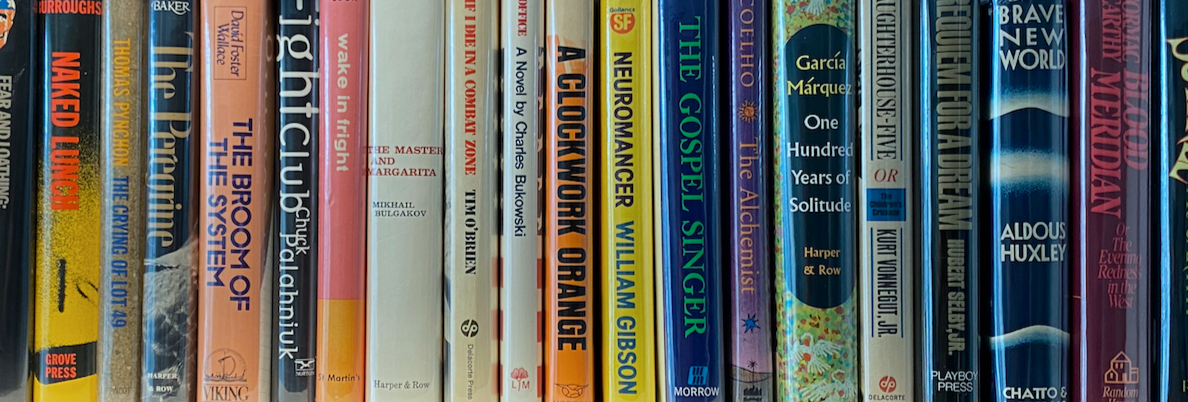

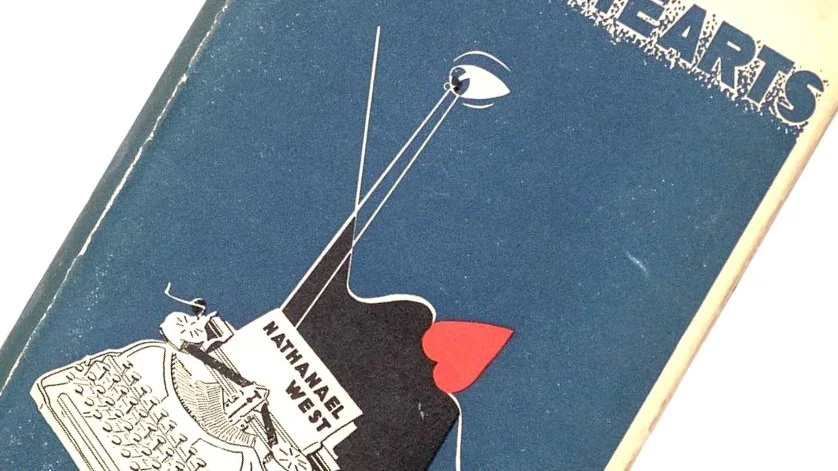
The Importance of the Dust Jacket: Why It Matters to Collectors
In the world of rare and collectible books, few elements carry as much mystique—and monetary weight—as the dust jacket. To new collectors, it may seem like a fragile, decorative wrapper. To seasoned bibliophiles, however, the dust jacket can sometimes be the difference between a $1,000 book and a $100,000 book. It is often the single most important factor in determining a modern first edition’s value.
Below, we’ll explore why dust jackets matter, what they represent to collectors, and how the presence, absence, or condition of a dust jacket dramatically transforms a book’s desirability. We’ll also look at iconic examples: The Catcher in the Rye, The Great Gatsby, Peter and Wendy, Harry Potter and the Philosopher’s Stone, The Cat in the Hat, Stephen King’s The Gunslinger, Gerald Murnane’s The Plains, and Brave New World.
Why Dust Jackets Exist in the First Place
Dust jackets (also called dust wrappers or DJs) were originally created as simple protective covers to keep books clean during transport or storage. Early examples were often discarded immediately—publishers didn’t expect anyone to keep them.
But collectors now understand that a dust jacket is more than packaging:
It represents originality
It reflects historical and artistic context
It sometimes includes first-state points not found on the book itself
It preserves publisher intent, design, and marketing language
And crucially, it can drastically affect the market value
Why Dust Jackets Matter to Collectors
1. Rarity and Survival
Because early dust jackets were usually thrown away or damaged, intact surviving examples are exceedingly rare. This scarcity amplifies value, especially for high-demand titles.
2. First-State Points Live on the Jacket
Sometimes the only true “first issue” identifiers appear on the jacket—price, blurbs, typography, or text errors. Remove the jacket, and you've lost critical bibliographic evidence.
3. Aesthetic and Historical Significance
Dust jackets capture the style, fonts, illustrations, and advertising aesthetic of their time. They’re pieces of cultural history as much as the books they protect.
4. The Dust Jacket Can Be Worth More Than the Book
In many cases the jacket alone is worth more than a copy of the book itself.
Case Studies : How Dust Jackets Define Value
The following examples demonstrate the extraordinary power the dust jacket holds in rare book collecting.
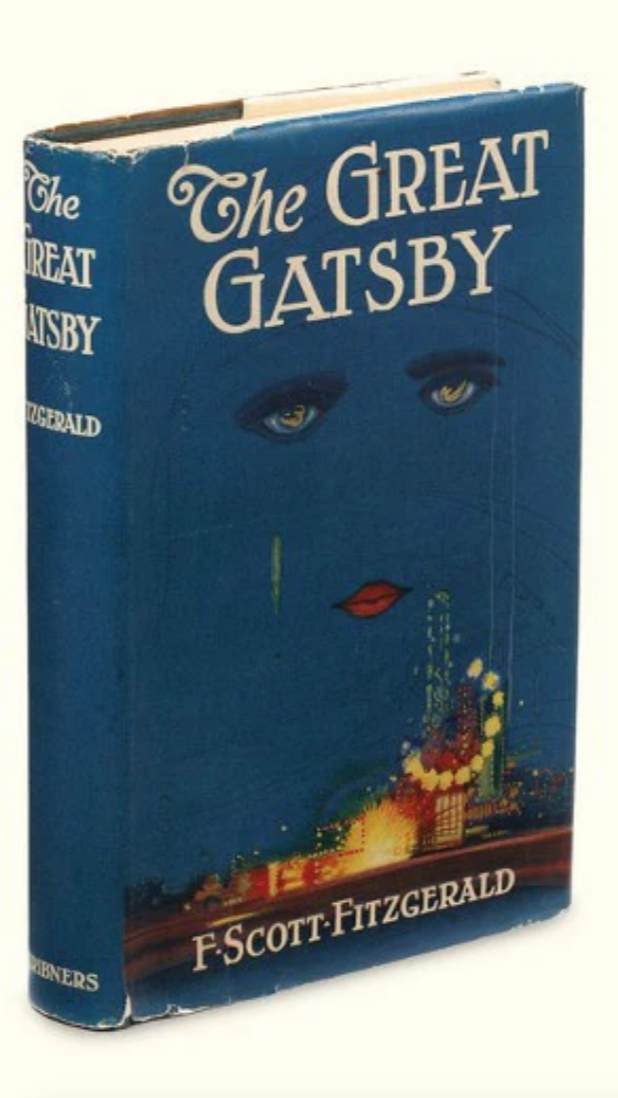
1. The Great Gatsby (1925)
Few dust jackets carry the mythic status of Francis Cugat’s iconic blue, celestial design.
With original first-state jacket: can reach hundreds of thousands of dollars. A copy sold at Sotheby’s in 2014 for a total of $377,000.
Regarding the first-state issue—originally, the “j” in Jay Gatsby on the rear panel was mistakenly printed in lowercase. The publisher manually corrected this error by hand-inking it to an uppercase “J.” Not a single uncorrected first-state jacket has ever been found. In the later second state, the printer fixed the mistake in production, and the “J” appears correctly printed.
With near-fine jacket: $200,000+
Without jacket: $1,500-3,000+
Why?
Because early owners tossed the jacket aside, leaving only a handful of true first-state jackets in existence. It is the perfect demonstration of dust-jacket scarcity driving astronomical value.
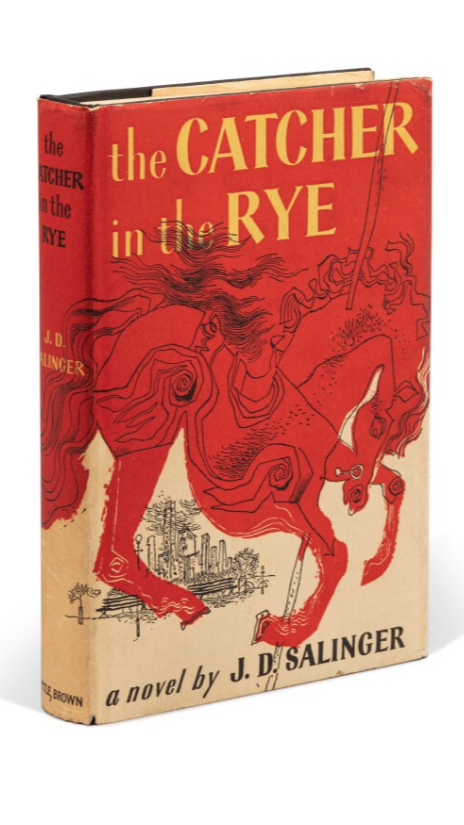
2. The Catcher in the Rye (1951)
J.D. Salinger insisted on distinct jacket features—including author photo and red-on-yellow typography. Condition of the jacket is everything:
A rare signed copy sold in 2022 for $225,000.
The first-issue dust jacket features J.D. Salinger’s black-and-white author photograph on the rear panel, credited in small type to Lotte Jacobi just above his name. The top of Salinger’s hair is trimmed on the first issue jacket, whereas later states the top of his head is more visible.
On the first-issue jacket, the $3.00 price is printed in slightly heavier type, and its exact placement differs: the dollar sign sits above the shoulder of the “R” in “Catcher,” whereas on later jackets it aligns above the tail of the “R.”
With near-fine jacket: $10,000+
Without jacket: $500–$1,500
Salinger’s photo was later removed, and price clips frequently cut by buyers reduce value. A pristine, unclipped jacket is now among the most desirable finds in modern literature.
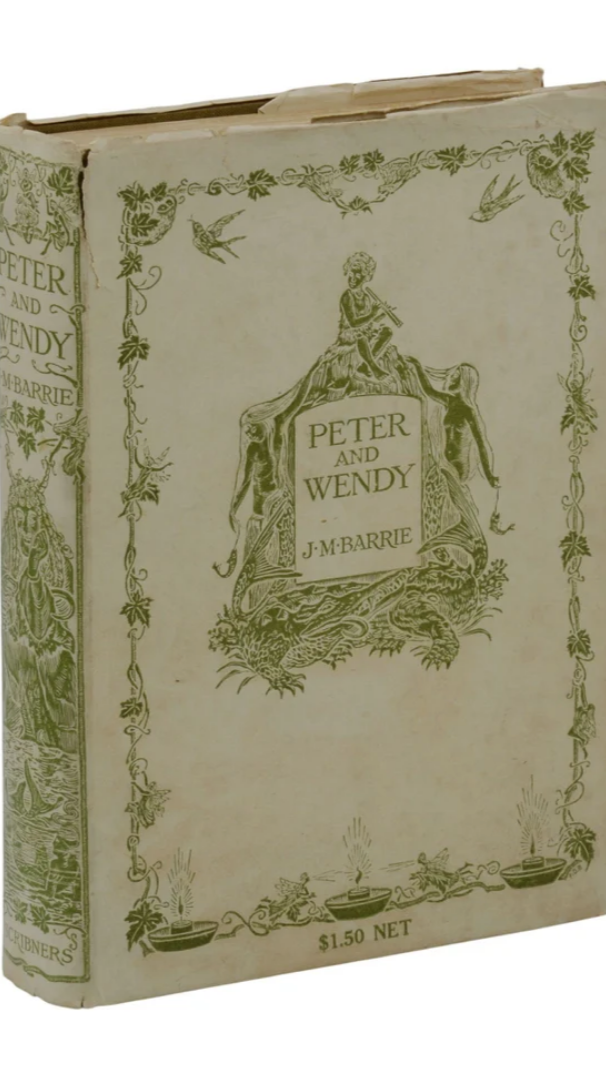
3. Peter and Wendy (1911)
Early 20th-century jackets are notoriously rare. Children’s books were handled roughly, and jackets rarely survived.
With original jacket: $10,000+
Without: $2,000-$4,000
Since Peter Pan editions were cherished and read repeatedly, the jacket is often the only way to locate true first-state details and provenance.
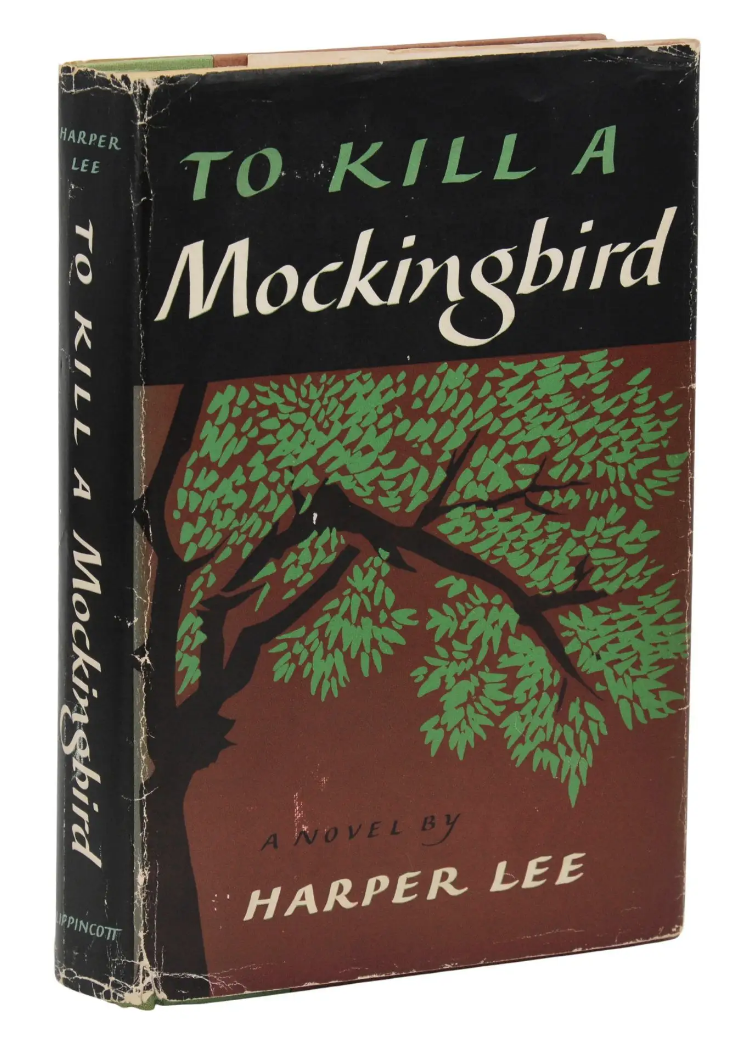
4. To Kill a Mockingbird — Harper Lee (1960)
The dust jacket is essential for identifying the true first printing.
A true first-edition dust jacket carries no printing statement and lists the $3.95 price on the lower corner of the front flap. There are actually two known first-state variants of this jacket. One version features two reviews on the back flap—from Shirley Ann Grau and Phyllis McGinley—though this state appears to be quite scarce. The more commonly seen variant includes a single review by Jonathan Daniels on the back flap.
Both states share all other first-issue points: the green Capote blurb, the $3.95 price, and the author photograph on the rear panel. Aside from the differing back-flap reviews, the jackets are otherwise identical.
Near Fine Jacketed copy: $10,000–$20,000+
No jacket: $1,000 +/-
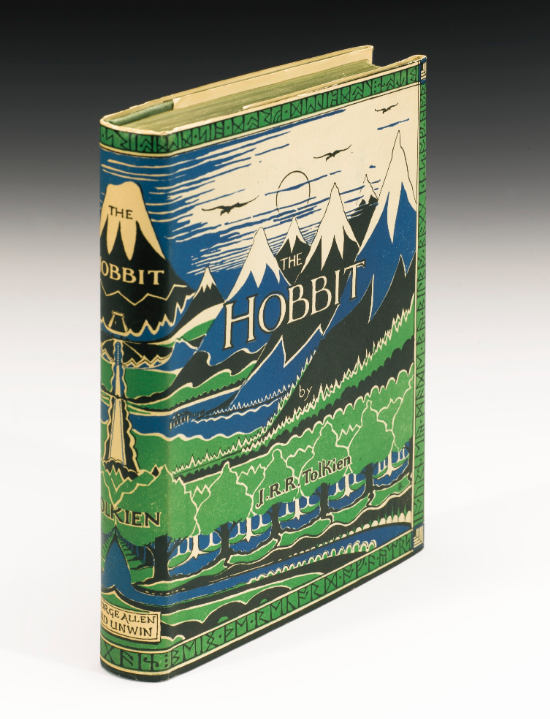
5. The Hobbit — J.R.R. Tolkien (1937)
One of the most iconic and fragile jackets in fantasy literature.
Key points:
Original “Mountains and Dragon” jacket by Tolkien
Prone to chips, tears, and sunning
Jacketed copy: $250,000–$400,000+
No jacket: $10,000-$40,000
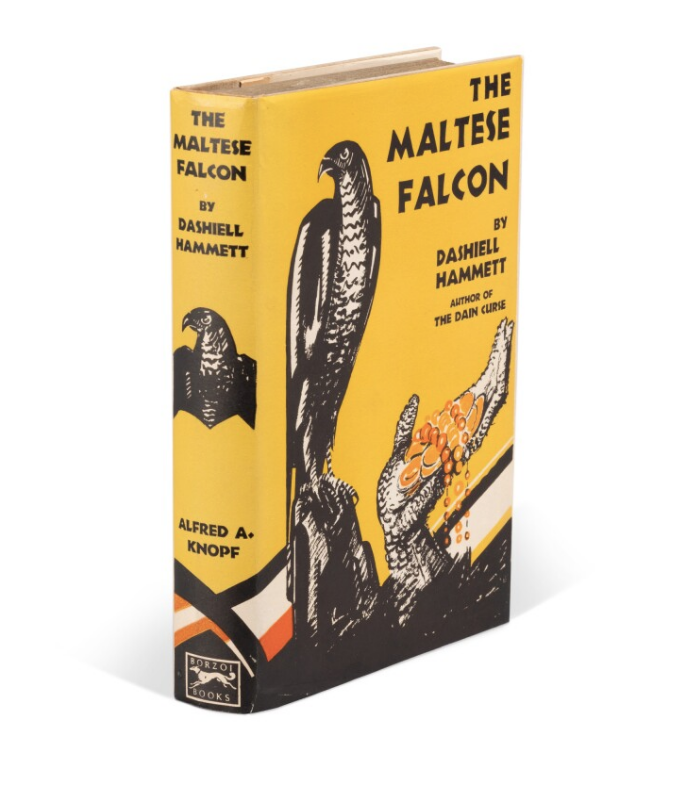
6. The Maltese Falcon — Dashiell Hammett (1930)
One of the most coveted crime noir first editions, and the dust jacket is the true separator of value.
Key first-state points:
$2.00 price intact
“BLANK END PAPERS” on the back flap (later states remove this)
Striking Art Deco jacket design prone to fading and chipping
Value impact:
With original first-state jacket: $75,000–$150,000+
Without jacket: usually $2,000–$4,000
The survival rate for first-state jackets is incredibly low, making this one of the best examples of how a jacket can multiply value 20–30x.
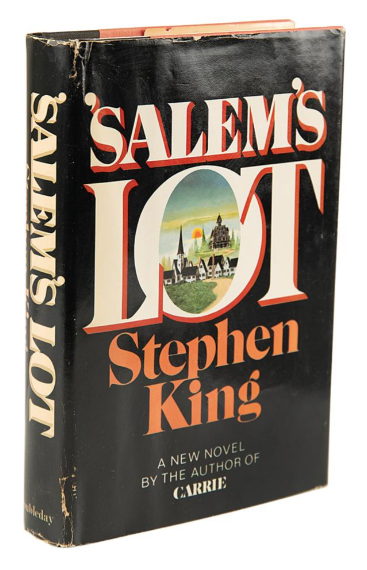
7. Salem’s Lot — Stephen King (1975)
One of King’s most collectible early books, and the first-state dust jacket is a major factor.
Key first-state points:
The Father Cody quote on the front flap (removed in later states)
$8.95 price unclipped
Glossy black jacket stock that shows wear very easily
Value impact:
With first-state jacket: $3,000–$7,500+
Without jacket: typically $150–$400
The book itself is fairly obtainable, but a clean first-state jacket (especially with the “Father Cody” mention, and the $8.95 price) is rare — and often sells immediately when it appears.
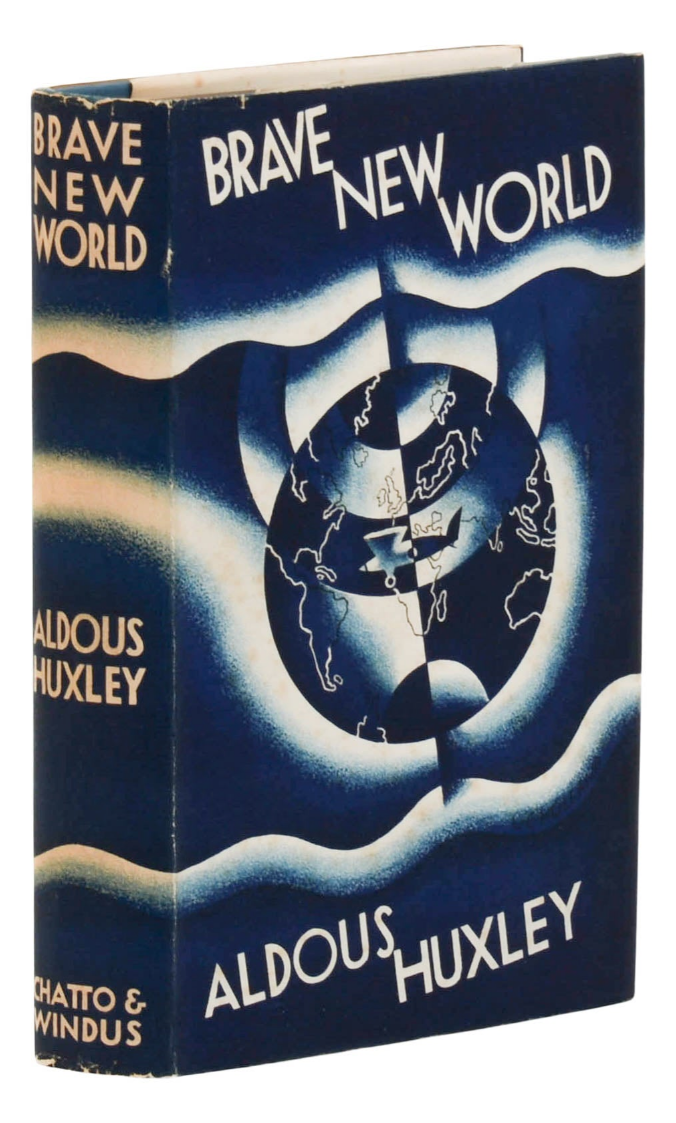
8. Brave New World (1932) — Aldous Huxley
Aldous Huxley's landmark dystopian novel has one of the most striking early-20th-century jackets.
Key first-state points:
7s. 6d. net price unclipped
Paper navy blue jacket stock that shows wear very easily
Value impact:
With first-state jacket: $8,000–$15,000+
Without jacket: typically $500–$1,000
Again, the fragile jacket and early owner habits have made surviving examples “unicorn-level” rare.
Final Thoughts: The Dust Jacket Is Part of the Book
For collectors, the dust jacket is not an accessory—it is an essential component of the book’s originality, history, and value. From The Great Gatsby to Harry Potter, from The Cat in the Hat to The Plains, the dust jacket is often the single most important factor separating an ordinary copy from a world-class collectible.
Whether you’re building your first collection or refining a specialized library, remember: a book without its dust jacket is like artwork without its frame—possible to appreciate, but never complete.