

Mixing the High and the Low: How Black Sparrow Press Built Charles Bukowski
Early in my twenties when I first started book collecting I focused on authors I enjoyed reading. Those tended to be outcasts, counter-culture writers and those blazing their own literary path. Bukowski was one of those authors who gave me a lot of laughs and an abundance of colorful stories which I still enjoy today.
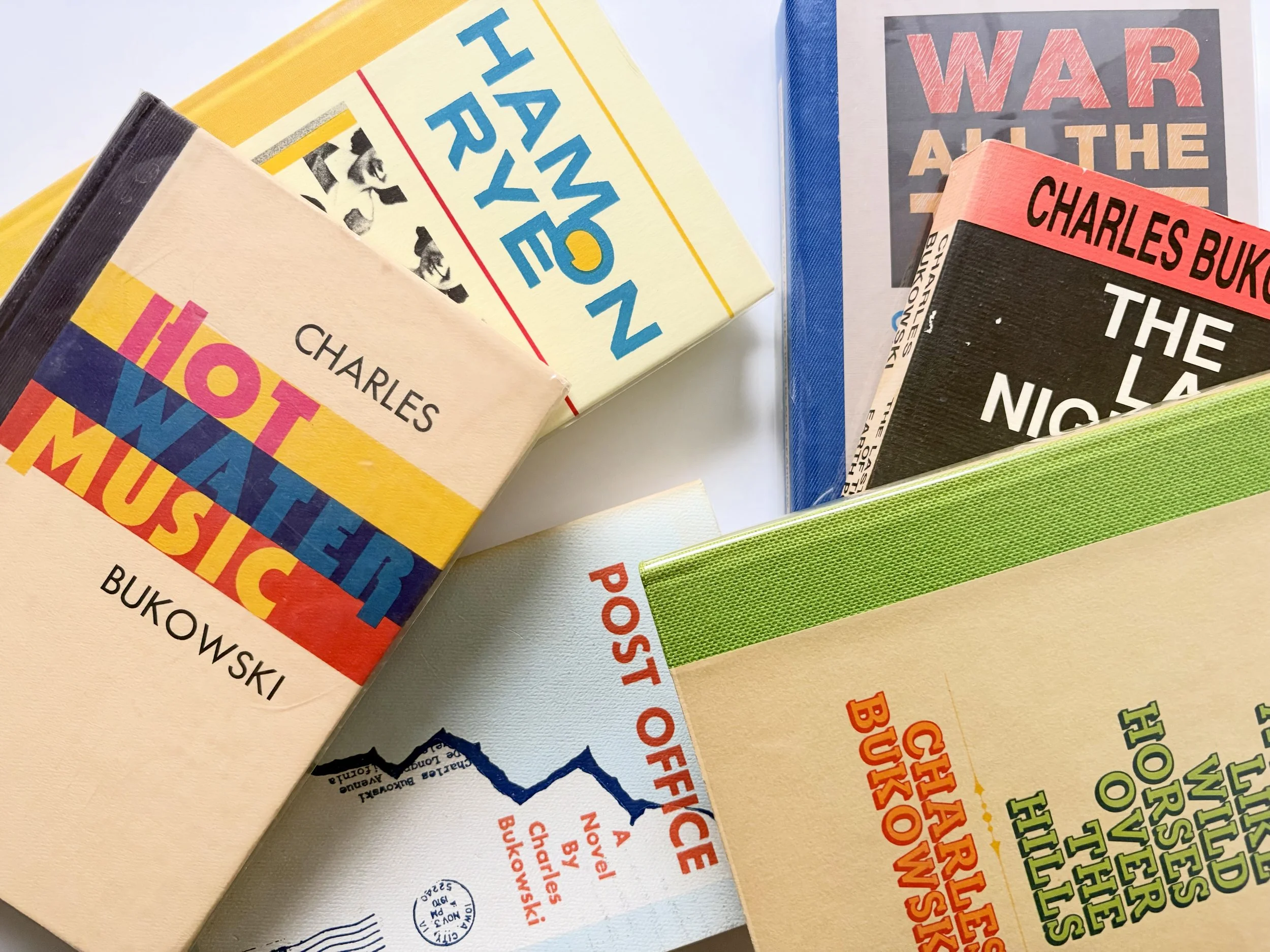
Walk into almost any medium-rare bookshop in the country, scan the modern firsts shelves, and your eye will catch them before you even read the spines. They don’t look like standard mid-century novels. Instead of glossy, pictorial dust jackets, you’ll see bold, block-lettered typography, brightly colored cloth spines, textured paper boards, and crisp, clear acetate wrappers.
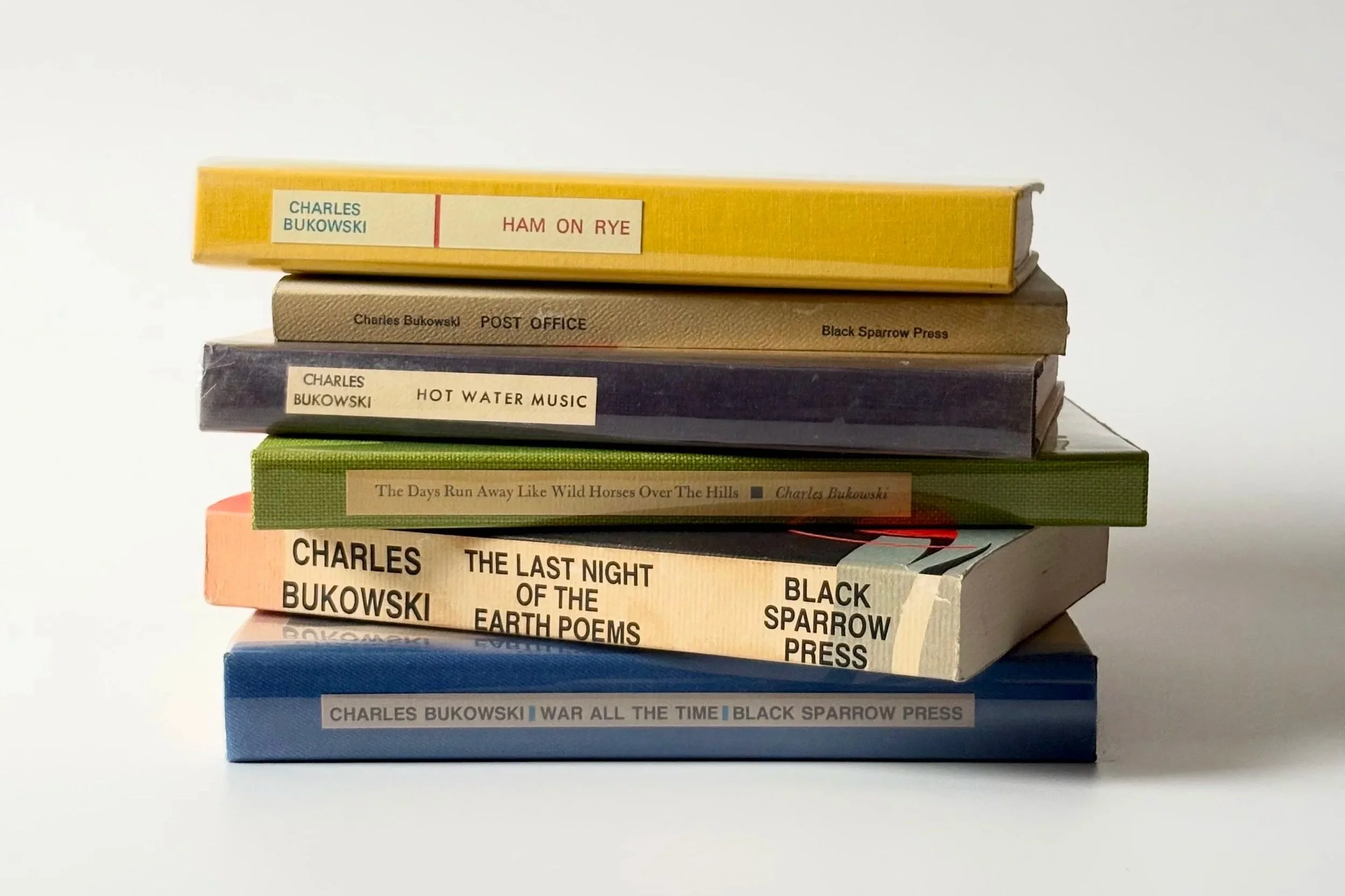
They are the books of Black Sparrow Press—and the physical representation through which Charles Bukowski went from an obscure Los Angeles postal clerk to an internationally recognized literary figure.
Few author-publisher relationships are as symbiotic, unlikely, or consequential as the one between Bukowski and Black Sparrow founder John Martin. For book collectors, their thirty-year partnership represents something rare: a press that treated gritty, uncompromising street literature with the reverence of a European fine press.
A Kitchen-Table Gamble
In 1966, John Martin was a 35-year-old manager at Office Supplies Unlimited in Los Angeles with zero publishing experience—he hadn’t even worked on his high school newspaper. What he did have was a collector’s obsession with D.H. Lawrence first editions and a fascination with a middle-aged poet whose raw, unadorned verse was appearing in underground mimeographed magazines.
Martin sold off his Lawrence collection to fund a publishing venture out of his Camden Avenue apartment. He named the imprint by fusing Caresse and Harry Crosby’s elite, avant-garde Black Sun Press with William Carlos Williams’s poem "The Sparrow"—a deliberate nod to his guiding aesthetic: "mix the high and the low."
Early production was as DIY as it gets. Martin commissioned small letterpress runs of broadsides (30 signed copies each) and slender chapbooks like Bukowski’s 4-page 2 Poems (1967), while his wife, Barbara, hand-stitched the bindings at their kitchen table.
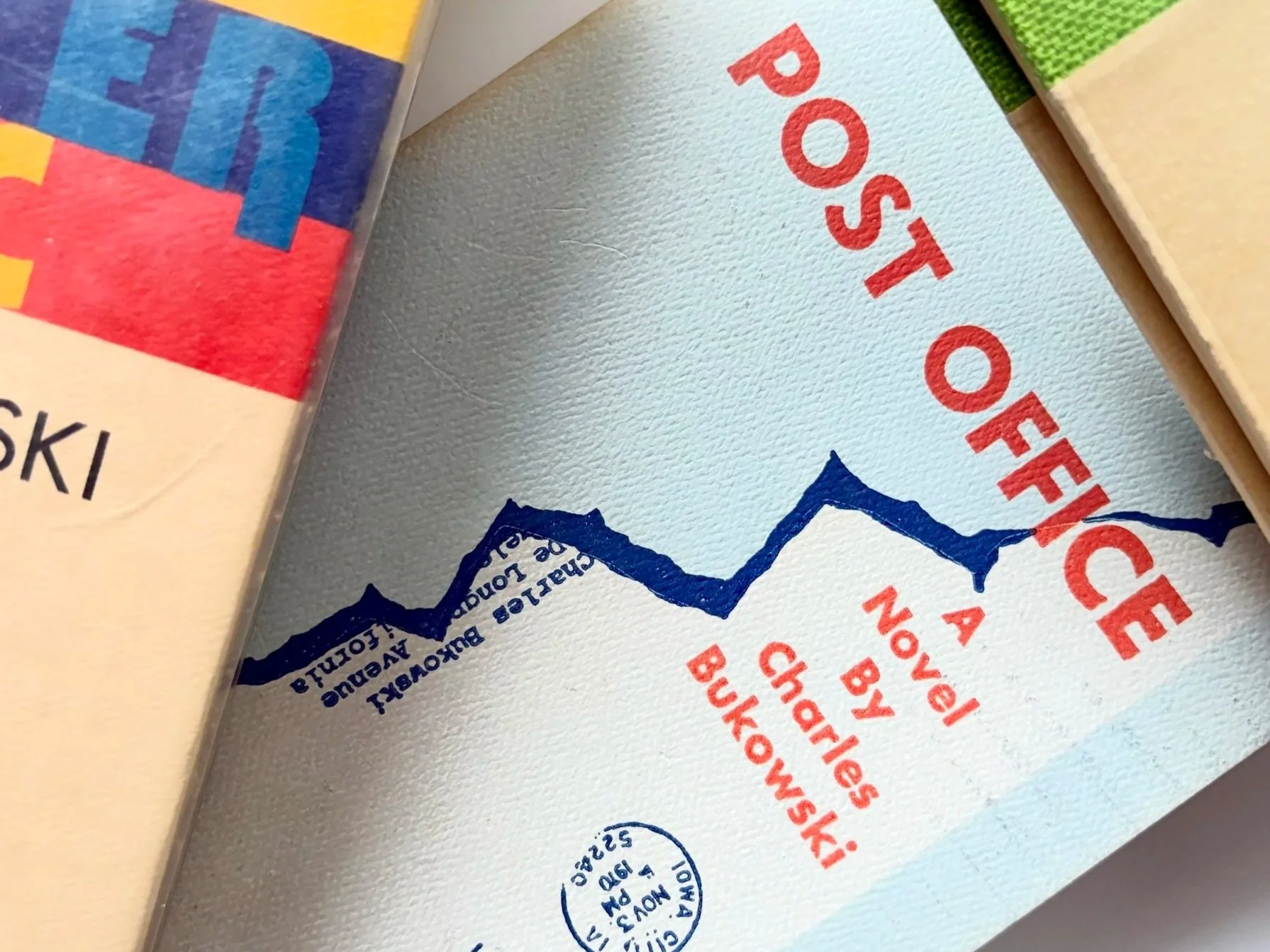
By 1969, Martin made one of the boldest wagers in American literary history. Sitting down with Bukowski, Martin tallied up the writer’s bare-bones monthly expenses—$35 for rent, $15 for child support, plus food and drink—and guaranteed him $100 a month for life if he would quit the U.S. Postal Service and write full-time exclusively for Black Sparrow. Bukowski took the deal. Less than a month later, he delivered the manuscript for his debut novel, Post Office (1971). The book turned Black Sparrow profitable for the first time, setting off a run of bestsellers—including Factotum, Women, and Ham on Rye—that kept the independent press thriving for decades.
The Collector’s Field Guide to Black Sparrow
Because John and Barbara Martin approached bookmaking as collectors first and businessmen second, Black Sparrow editions are packed with bibliographic points, deliberate design choices, and tiered limitations that make them a joy to hunt.
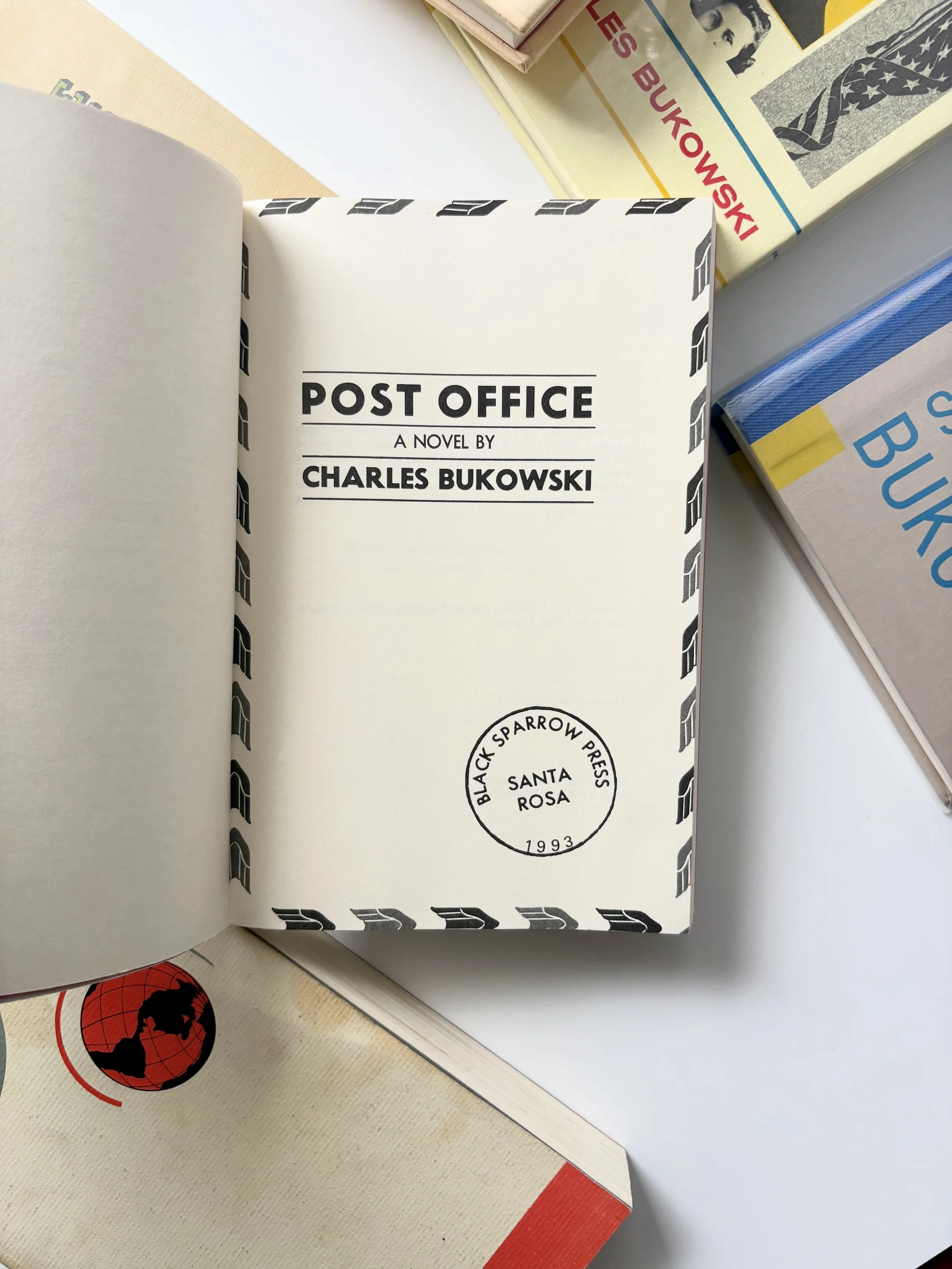
1. The Two-Color Title Page Tell
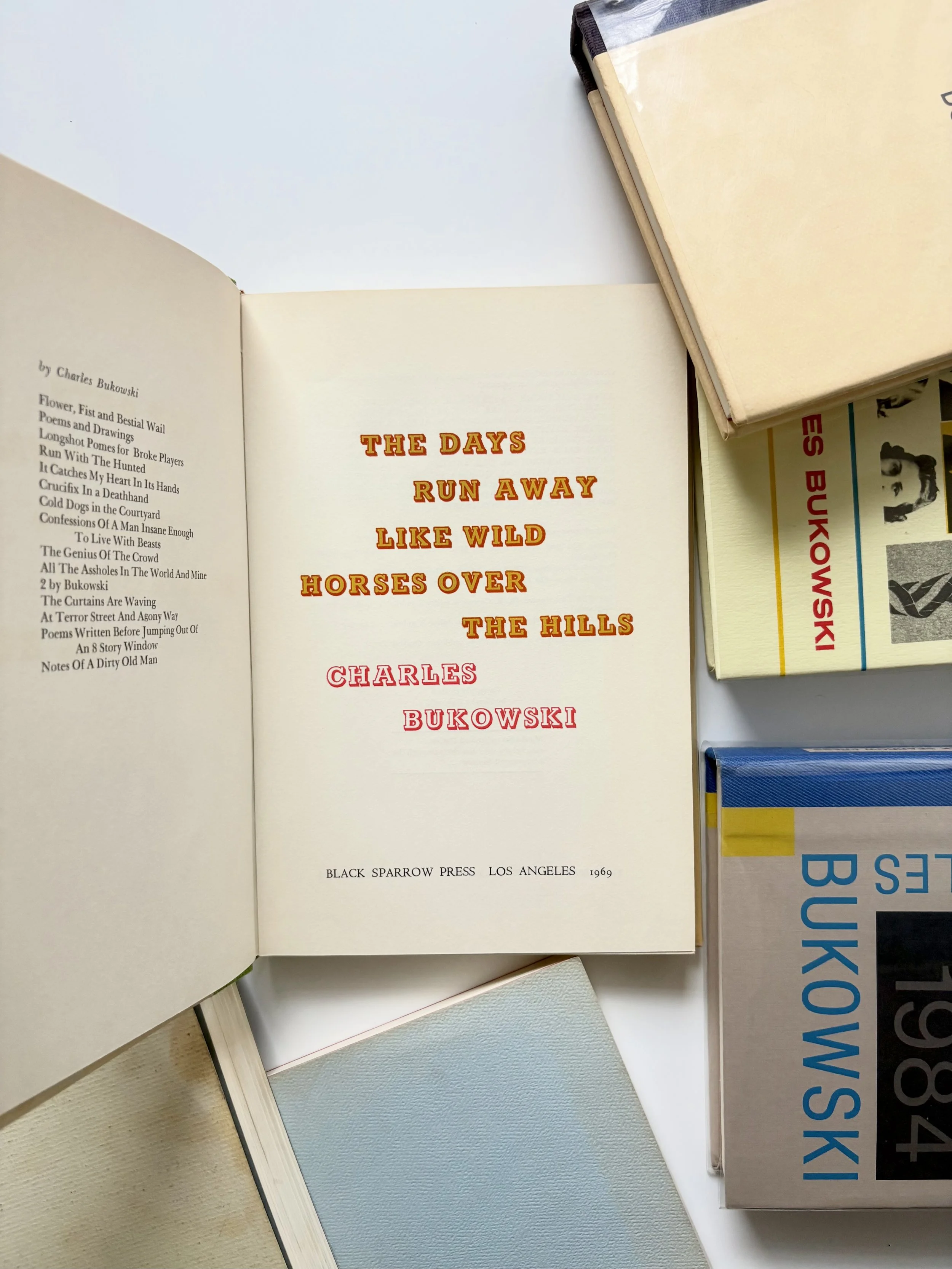
If you are standing in a used bookstore wondering whether a hardcover or paperback copy of Love is a Dog from Hell or South of No North is a true first printing, flip straight to the title page. On Black Sparrow first editions, the title page is printed in two or more colors (often red and black, or blue and black). Later printings revert to plain black ink only, and list subsequent printings on the copyright page.
2. Tiered Limitations & Numbered Editions
Martin mastered a multi-tiered publishing model that allowed everyday readers to buy a $4 paperback while letting high-end collectors fund the press's overhead. A typical Bukowski release was issued simultaneously across several states:
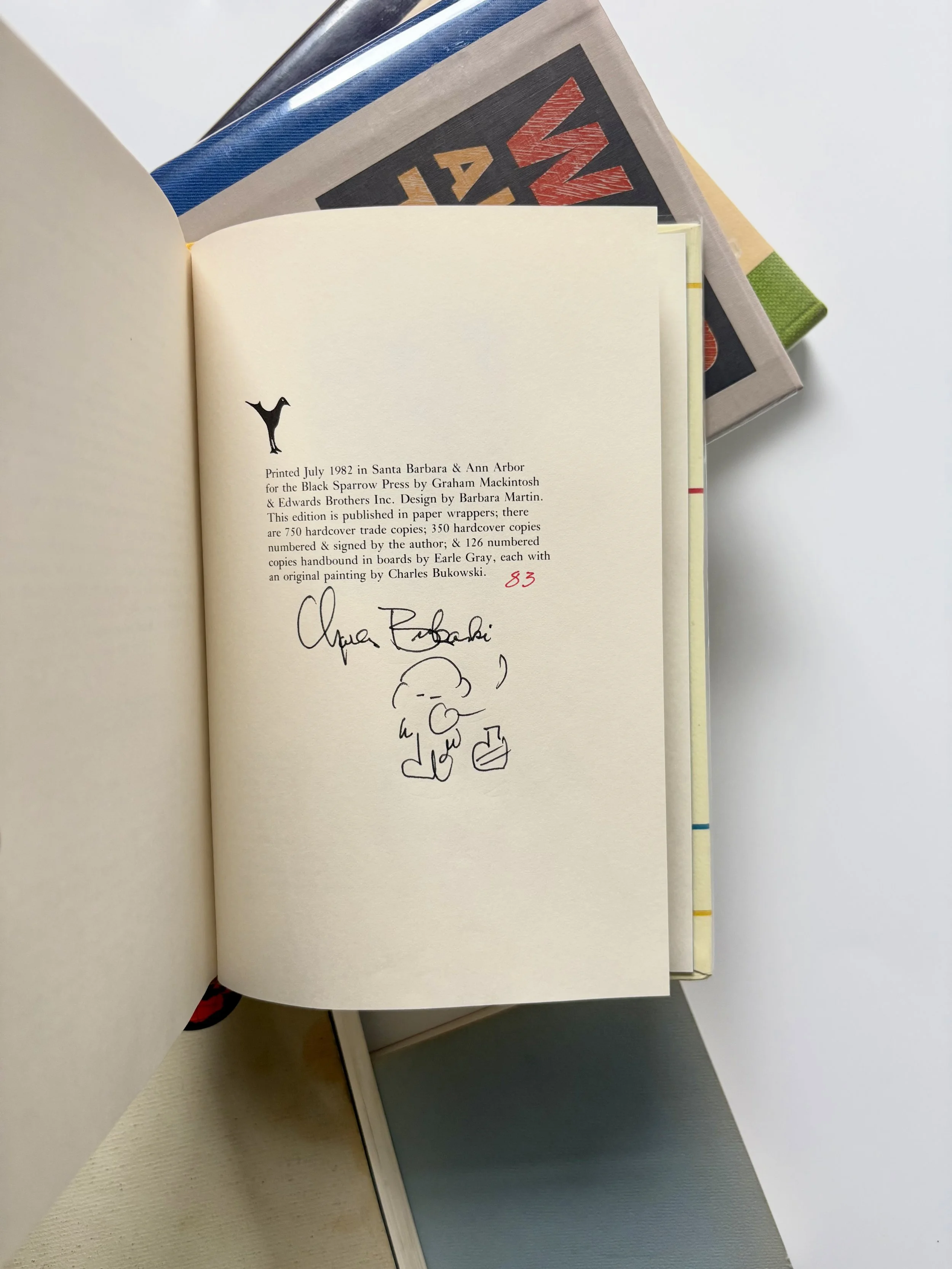
Trade Paperback & Trade Hardcover: The standard first printings, with interior text often printed offset by Edwards Brothers in Ann Arbor, Michigan, as page counts grew. There were a larger, but still limited run of first printings in both paperback and hardcover, often limited to 750–1,000 copies.
Signed Numbered Hardcovers: Typically limited to 200–400 copies, signed by Bukowski on a tipped-in or bound-in colophon page.
Deluxe Editions: Ultra-scarce runs— small numbered runs of 50 to 100—hand-bound in quarter-cloth or decorative boards by master bookbinders like Earle Gray. These editions might feature original paintings or artwork tipped-in.
3. Original Artwork Bound Inside
For the highest-tier deluxe copies—including editions of The Days Run Away Like Wild Horses Over the Hills (1969), South of No North (1973), and Ham on Rye (1982)—Bukowski sat down with paints, pastels, or ink and created original artwork bound directly into each book. Every copy in those limitations is effectively a one-of-one art object.
4. The Barbara Martin Aesthetic & Acetate Jackets
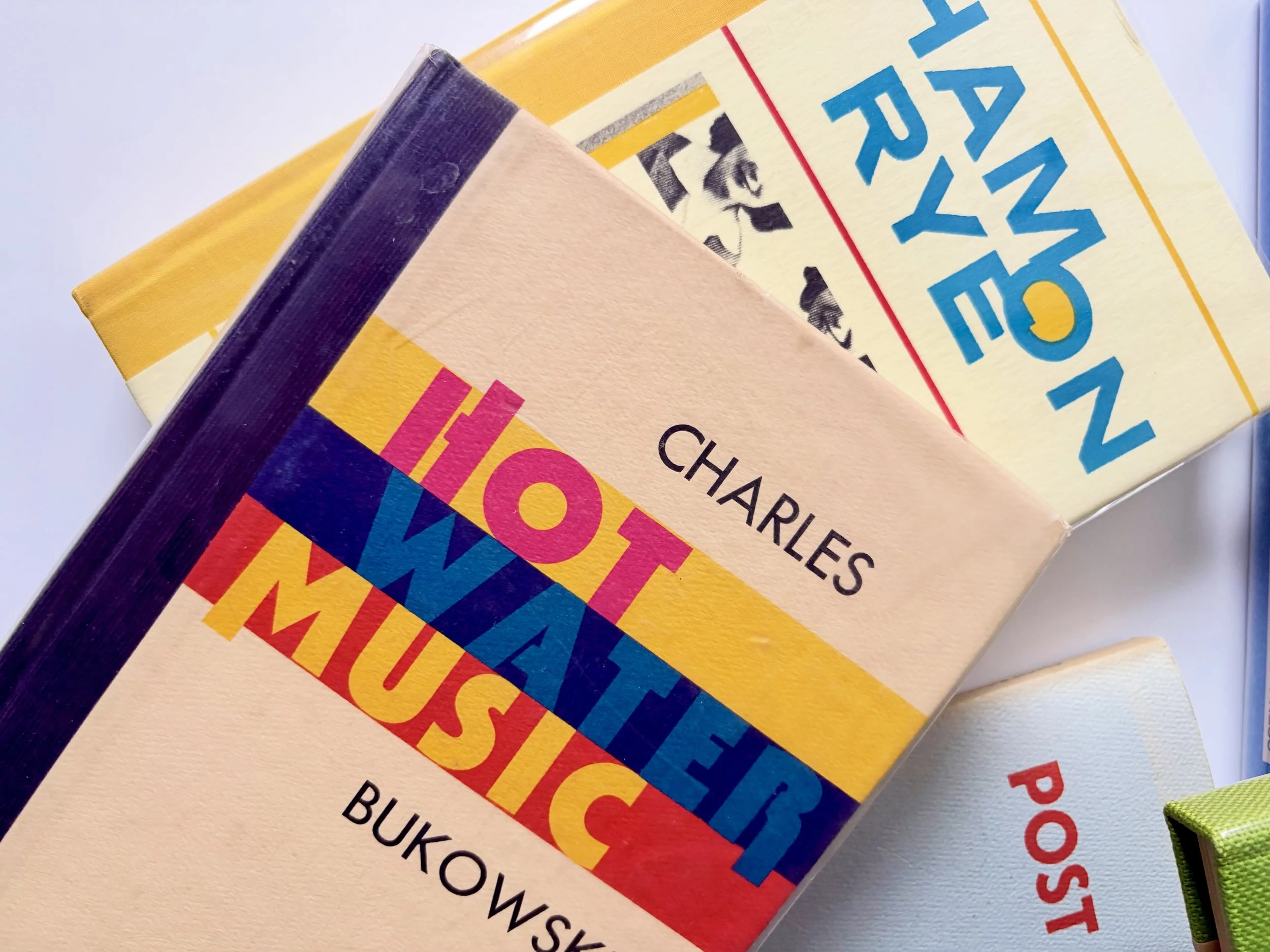
Barbara Martin’s visual direction gave Black Sparrow an immediate brand identity. Rather than commissioning wrap-around dust jackets that tore easily, she favored exposed decorative boards, bold geometric typography, and clear acetate wrappers. (Collector’s note: Original acetate jackets shrink, cloud, or split easily over fifty years—finding a 1970s Black Sparrow hardcover in crisp, unchipped original acetate adds significant value.)
5. Annual New Year’s Greetings
Every December, Black Sparrow printed small, staple-bound holiday pamphlets featuring previously uncollected poems or stories by Bukowski (and later authors like John Fante and Paul Bowles) to send to friends, booksellers, and collectors. Today, these slender chapbooks—such as Life and Death in the Charity Ward (1977)—are affordable, entry-level treasures for collectors looking to build a complete run.
The End of an Era
Bukowski died in 1994, though Martin continued publishing posthumous collections from Bukowski’s vast archive of manuscripts through the end of the decade. In 2002, at age 71, Martin decided to retire. He sold the publishing rights and remaining stock of his three biggest stars—Bukowski, John Fante, and Paul Bowles—to HarperCollins’s Ecco imprint, while transferring the remaining backlist and inventory to Boston-based fine press publisher David R. Godine.
Black Sparrow’s physical archive now resides in university special collections, including Western Michigan University and the University of Arizona. Yet out in the wild, the books remain deeply alive. Whether you stumble across a well-loved trade paperback of Post Office or a signed lettered hardcover with a Bukowski painting tipped inside, holding a Black Sparrow first edition is a reminder of what happens when a publisher bets everything on an unfashionable voice—and builds a frame worthy of the art.
Black Sparrow Press is a terrific example of what can become when creating tiered editions, colorful graphic design, craftsmanship and collectibility.